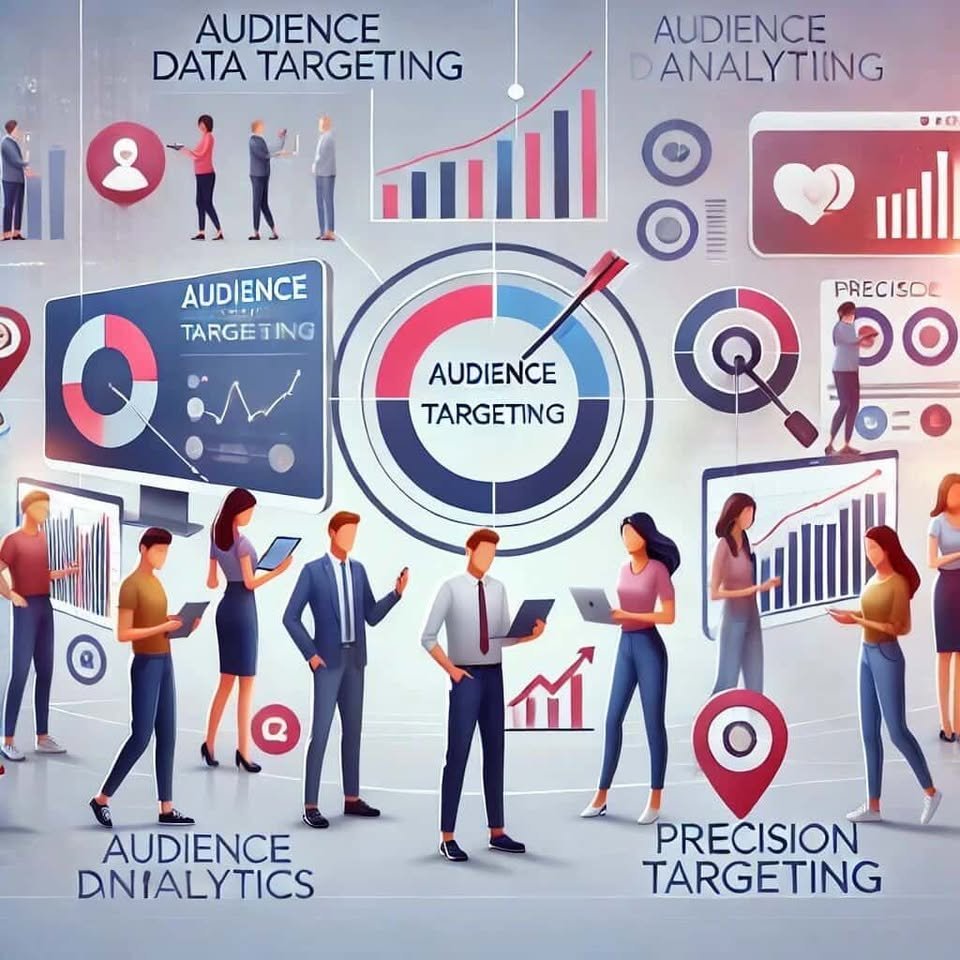
In digital marketing, creating good content is important, but creating content for the right people is even more important. You can have a beautiful website, attractive social media posts, and a great product, but if your marketing message is reaching the wrong audience, getting good results can be difficult.
This is why understanding your target audience is one of the first steps in building a successful digital marketing strategy.
A target audience is the specific group of people who are most likely to be interested in your product, service, content, or brand. They may share similar needs, interests, behaviors, locations, age groups, or purchasing habits.
For example, a business selling professional skincare products may not need to target everyone online. Instead, it may focus on people who are interested in skincare and are looking for solutions to specific skin concerns.
Finding the right target audience helps businesses spend their time, money, and effort more effectively. It also makes it easier to create relevant content, choose the right platforms, develop better advertisements, and build stronger relationships with customers.
In this blog, we will explore what a target audience is, why it matters, and how you can identify the right audience for your business.
What Is a Target Audience?
A target audience is a particular group of people that a business wants to reach with its marketing activities.
These people are more likely to have an interest in the product or service being offered.
A target audience can be defined using different characteristics, such as:
- Age
- Gender
- Location
- Occupation
- Income level
- Education
- Interests
- Lifestyle
- Hobbies
- Buying behavior
- Online behavior
- Needs
- Problems
- Goals
For example, imagine you are marketing an online digital marketing course.
Your target audience might be:
Students, beginners, freelancers, and small business owners who want to learn digital marketing skills.
This is much more useful than simply saying:
“Everyone who uses the internet.”
The more clearly you understand your audience, the easier it becomes to communicate with them.
Why Is Finding the Right Target Audience Important?
One of the biggest mistakes businesses make is trying to market to everyone.
At first, targeting everyone may seem like a good idea because it gives you a larger potential audience.
However, not everyone needs your product.
When you try to communicate with everyone, your message can become too general.
For example:
“We provide the best products for everyone.”
This does not tell a specific customer why they should choose you.
A more focused message could be:
“Affordable skincare products designed for simple daily routines.”
This message speaks more directly to people interested in skincare and simple routines.
Finding the right target audience can help you:
- Create better content
- Improve advertising
- Reduce wasted marketing spending
- Increase engagement
- Generate better leads
- Improve conversions
- Build customer trust
- Understand customer needs
- Develop better products
- Build a stronger brand
- Start With Your Product or Service
Before looking for your audience, understand what you are offering.
Ask yourself:
What does my product do?
What problem does it solve?
Who needs this solution?
What benefits does it provide?
For example, suppose you offer social media management services.
Your service may help businesses save time, improve their online presence, and create consistent social media content.
Potential customers could include small businesses, entrepreneurs, restaurants, clothing brands, beauty businesses, or local service providers.
Understanding your own offering gives you a starting point for finding your audience.
- Identify the Problem You Solve
People often buy products or services because they have a problem they want to solve.
Think beyond the product itself.
Instead of asking:
“Who might like my product?”
Ask:
“Who has the problem that my product solves?”
For example, a meal delivery business does not simply sell food.
It may solve problems such as:
- Lack of cooking time
- Busy work schedules
- Difficulty planning meals
- Convenience
This means busy professionals and students may be potential target audiences.
Understanding the problem allows you to identify people who genuinely need your solution.
- Study Your Existing Customers
If your business already has customers, they are one of your best sources of information.
Look at your existing customer base.
Try to understand:
- Who buys from you?
- What products do they purchase?
- Where are they located?
- What problems do they have?
- How did they discover your brand?
- Why did they choose you?
- What questions do they ask?
You may notice patterns.
For example, perhaps most of your customers are young professionals from a particular city.
That information can help you focus your future marketing efforts.
- Create a Customer Persona
A customer persona is a simple profile representing your ideal customer.
Instead of thinking about your audience as a large group of people, imagine one typical customer.
For example:
Name: Anu
Age: 24
Location: Kerala
Occupation: Student
Interest: Digital marketing and social media
Goal: Learn new skills and find a job
Problem: Doesn’t know where to start
Preferred platforms: Instagram and LinkedIn
This persona helps you imagine who you are speaking to when creating content.
You can create more than one persona if your business serves different groups.
- Look at Demographics
Demographics are basic characteristics about your audience.
These can include:
- Age
- Gender
- Location
- Education
- Occupation
- Income
- Family status
For example, a luxury travel company may target people with higher disposable income who are interested in premium travel experiences.
A student-focused educational service may target younger audiences.
Demographics provide a basic understanding of who your audience is.
However, demographics alone are not enough.
- Understand Psychographics
Psychographics focus more on what people think and feel.
They include:
- Interests
- Values
- Lifestyle
- Opinions
- Motivations
- Personality
- Goals
- Attitudes
Two people can have the same age and live in the same city but have completely different interests and purchasing behaviors.
For example, two 25-year-olds may live in the same area.
One may be interested in fitness and healthy living, while the other may be interested in gaming and technology.
Understanding psychographics helps you create more personalized marketing messages.
- Understand Your Audience’s Needs
Good marketing starts with understanding what people need.
Your audience may want:
- Convenience
- Affordable prices
- Better quality
- Faster service
- Professional support
- Education
- Entertainment
- Security
- Time savings
Find out what matters most to your audience.
Then communicate how your product or service can provide that benefit.
- Identify Their Pain Points
Pain points are problems or frustrations that customers experience.
For example, a small business owner might struggle with:
- Creating social media content
- Getting website traffic
- Understanding SEO
- Managing advertisements
- Generating leads
If you provide digital marketing services, these pain points can help you create highly relevant content.
Instead of simply saying:
“We offer digital marketing services.”
You could say:
“Struggling to get customers from social media? Here are three ways to improve your strategy.”
The second message directly addresses a problem.
- Find Out Where Your Audience Spends Time Online
Different audiences use different platforms.
Some people spend more time on Instagram.
Others may prefer LinkedIn, YouTube, Facebook, Pinterest, or other platforms.
Your goal is not to be everywhere.
Your goal is to be where your audience is.
For example:
Students: Instagram, YouTube, LinkedIn
Professionals: LinkedIn
Visual-focused audiences: Instagram, Pinterest
Video-focused audiences: YouTube and short-form video platforms
Research your audience and identify the platforms where they are most active.
- Study Your Competitors
Your competitors can provide useful information about your target audience.
Look at their:
- Social media content
- Website
- Blog posts
- Advertisements
- Comments
- Reviews
- Products
- Offers
Pay attention to the people interacting with their content.
What questions are they asking?
What problems are they discussing?
What type of content gets the most engagement?
Competitor research does not mean copying them.
Instead, use it to understand the market and identify opportunities.
- Use Social Media Insights
Social media platforms often provide analytics that can help you understand your audience.
Depending on the platform and account type, you may be able to see information about:
- Age groups
- Locations
- Engagement
- Reach
- Active times
- Content performance
This information can help you identify patterns.
For example, you might discover that most of your engaged audience is between 18 and 30 years old.
You can then create content that is more relevant to that group.
- Use Website Analytics
Your website can also provide useful information about your visitors.
Analytics can help you understand:
- Where visitors come from
- Which pages they visit
- How long they stay
- What content they interact with
- What devices they use
- Which pages lead to conversions
This information can help you understand what your audience wants.
For example, if one particular blog post receives significantly more traffic than others, it may indicate that the topic is highly relevant to your audience.
- Conduct Surveys
Sometimes the easiest way to understand your audience is to ask them directly.
You can create simple surveys using questions such as:
What is your biggest challenge?
What type of content would you like to see?
Which product would you like us to introduce?
Which platform do you use most?
Surveys can provide direct insights that analytics alone cannot provide.
You can share surveys through email, social media, websites, or online communities.
- Read Customer Reviews
Customer reviews can reveal a lot about what people value.
Read both positive and negative reviews.
Positive reviews can tell you what customers love.
Negative reviews can show you where improvements are needed.
Pay attention to repeated words and themes.
For example, customers might repeatedly mention:
- Fast delivery
- Affordable prices
- Friendly service
- Product quality
- Easy ordering
These insights can help you understand what matters to your audience.
- Listen to Social Media Conversations
Social listening means paying attention to conversations happening online about your industry, products, competitors, or relevant topics.
Look at:
- Comments
- Questions
- Reviews
- Discussions
- Hashtags
- Community posts
You may discover problems that your audience is experiencing but that businesses are not addressing properly.
This can give you ideas for new content, products, or services.
- Understand the Customer Journey
Not everyone in your target audience is ready to buy immediately.
People may move through different stages.
Awareness
They discover your brand for the first time.
Interest
They start learning about your product.
Consideration
They compare your product with alternatives.
Purchase
They decide to buy.
Loyalty
They become repeat customers and recommend your brand.
Your marketing content should support customers throughout this journey.
For example, educational content may work well during the awareness stage, while testimonials and product comparisons may be more useful during the consideration stage.
- Test Different Audiences
You may not identify the perfect audience immediately.
Marketing involves testing and learning.
Try different audience groups and compare the results.
For example, if you sell fitness products, you could test different groups based on:
- Age
- Location
- Fitness interests
- Lifestyle
- Goals
Measure which group responds best.
Then focus more of your marketing efforts on the audiences showing stronger interest.
- Avoid Making Your Audience Too Broad
A very broad audience can make marketing difficult.
For example:
“People interested in fashion.”
This includes millions of people.
A more specific audience could be:
“Young women interested in affordable casual fashion.”
A more specific audience gives you a clearer direction for content and advertising.
However, avoid making your audience so narrow that there are not enough potential customers.
The goal is to find a useful balance.
- Create Content for Your Audience
Once you understand your audience, create content specifically for them.
For example, if your audience consists of digital marketing beginners, you can create:
- Beginner guides
- Simple explanations
- Marketing tips
- Tutorials
- Tool recommendations
- Common mistakes
- Case studies
If your audience consists of business owners, you might focus more on:
- Marketing strategies
- Lead generation
- Customer acquisition
- ROI
- Business growth
- Advertising
Your content should reflect your audience’s needs and goals.
- Use the Language Your Audience Understands
Communication becomes more effective when you use language that your audience understands.
If you are targeting beginners, avoid unnecessary technical terms.
Use simple examples and explanations.
If you are communicating with professionals, you can use more industry-specific terminology.
The goal is to make your message feel natural to the people you want to reach.
- Personalize Your Marketing
Once you understand your audience, you can make your marketing more personalized.
For example, instead of sending the same message to everyone, you can create different content for different customer groups.
A clothing brand might create separate campaigns for:
- College students
- Working professionals
- Parents
- Occasion wear customers
Personalization can make people feel that the brand understands their needs.
- Focus on Quality, Not Just Numbers
Finding the right audience is not about getting the largest possible number of people.
It is about reaching people who are genuinely interested in what you offer.
For example, 1,000 relevant followers may be more valuable than 10,000 people who have no interest in your product.
A smaller audience with strong engagement can lead to better relationships and stronger conversions.
- Keep Updating Your Audience Research
Your target audience can change over time.
Customer interests, trends, technology, competition, and purchasing behavior can all change.
Therefore, audience research should not be a one-time activity.
Review your data regularly.
Ask:
Has my audience changed?
Are their needs different now?
Which content performs best?
Are new customer groups appearing?
Regular research helps your marketing strategy stay relevant.
Common Mistakes When Finding a Target Audience
Trying to Reach Everyone
Not everyone needs your product.
Assuming Instead of Researching
Do not simply guess what your audience wants. Use data, surveys, reviews, and conversations.
Focusing Only on Age and Gender
Demographics are useful, but interests, needs, behaviors, and motivations are also important.
Ignoring Existing Customers
Your current customers can provide valuable information about your ideal audience.
Choosing Platforms Randomly
Focus on platforms where your target audience is actually active.
Never Testing
Your first audience definition may not be perfect. Test different groups and learn from the results.
A Simple Target Audience Formula
If you are a beginner, use this simple formula:
Who + Problem + Need + Platform + Goal
For example:
Who: Small business owners
Problem: Struggling to get online visibility
Need: Simple digital marketing strategies
Platform: Instagram and LinkedIn
Goal: Increase customers and online presence
This gives you a clear starting point for your marketing strategy.
Final Thoughts
Finding the right target audience is one of the most important steps in digital marketing.
You can create excellent content, run attractive advertisements, and have a professional website, but your marketing becomes much more effective when it reaches the people who actually need what you offer.
Start by understanding your product and the problem it solves. Study your existing customers, create customer personas, research demographics and psychographics, identify pain points, and understand where your audience spends time online.
Use social media insights, website analytics, surveys, reviews, and competitor research to learn more.
Most importantly, do not be afraid to test and change your strategy.
Your target audience is not simply a number on an analytics dashboard. They are real people with needs, problems, goals, interests, and expectations.
When you understand those people, you can create better content, write stronger marketing messages, build more meaningful relationships, and offer products or services that truly help them.
Remember:
The goal of digital marketing is not to reach everyone.
It is to reach the right people with the right message at the right time.
When you find the right audience, your marketing becomes more focused, your content becomes more relevant, and your chances of building long-term customer relationships become much stronger.
Know your audience. Understand their needs. Create value. Build trust. Grow your brand.