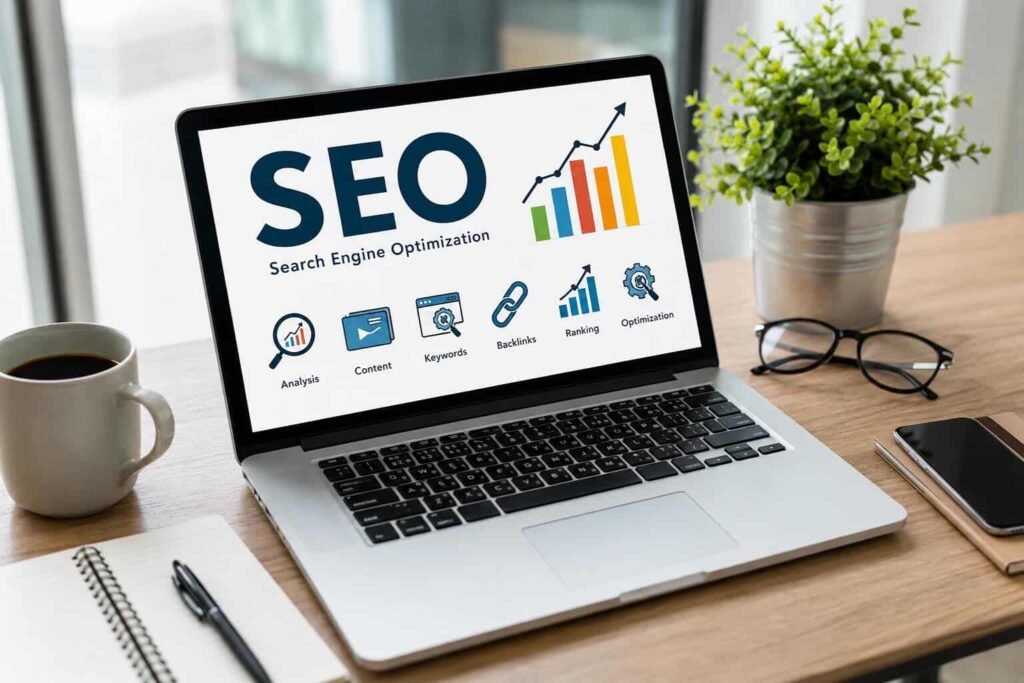
Have you ever wondered why some websites appear on the first page of Google while others remain hidden? The answer often comes down to one powerful digital marketing strategy: SEO (Search Engine Optimization).
In today’s digital world, having a website is only the beginning. You may have an attractive website, excellent products, and valuable services, but what happens if your target audience cannot find you? This is where SEO becomes essential.
SEO helps your website appear more prominently in search engine results when people search for information, products, or services related to your business. It is not about simply adding keywords to a webpage. It is about understanding what people are searching for, creating valuable content, improving the user experience, and making your website easier for search engines to understand.
What Is SEO?
SEO stands for Search Engine Optimization. It is the process of improving a website so that it can attract more visitors through unpaid, or organic, search results.
For example, imagine someone searches for “best digital marketing tips for beginners.” Hundreds or thousands of pages may contain information about that topic. Search engines decide which pages are most relevant and useful to display.
A good SEO strategy helps your website become more competitive in those search results.
The goal is simple:
More visibility → More relevant visitors → More opportunities → More growth.
Why Is SEO Important?
Think about the last time you searched for something online. Did you scroll through ten pages of search results? Probably not. Most people look at the first few results and choose the one that appears most useful.
This is why search visibility is so important for businesses.
SEO can help you:
-
- Increase organic website traffic
-
- Reach your target audience
-
- Build online credibility
-
- Generate leads
-
- Improve brand awareness
-
- Increase potential sales
-
- Create long-term online visibility
Unlike traditional advertising, SEO can continue bringing visitors to your website even after a piece of content has been published.
Start With Keyword Research
One of the first steps in SEO is understanding what your audience is searching for.
Keywords are the words and phrases people type into search engines.
For example:
-
- “SEO for beginners”
-
- “How to increase website traffic”
-
- “Social media marketing tips”
-
- “Digital marketing strategies”
-
- “Best SEO practices”
Keyword research helps you understand what your audience wants to know.
However, don’t simply choose keywords with high search volume. Choose keywords that are relevant to your business and match your audience’s search intent.
Create Content People Actually Want to Read
SEO and content marketing go hand in hand.
Search engines want to provide users with useful information. Therefore, your content should focus on answering questions, solving problems, and providing genuine value.
Instead of writing an article simply because you want to rank for a keyword, ask:
“What does my audience actually need to know?”
Create blogs, guides, tutorials, checklists, case studies, and other useful resources that answer real questions.
Quality content can attract visitors, encourage them to explore your website, and help establish your brand as a trustworthy source of information.
Optimize Your Blog Posts
Creating good content is only one part of SEO. You also need to optimize your pages.
Some important areas include:
Page Title
Your title should clearly explain what your content is about and encourage people to click.
For example:
SEO: How to Make Your Website More Visible
is much clearer than:
Improve Your Website
Headings
Use headings and subheadings to organize your content. This makes your blog easier to scan and helps readers quickly find the information they need.
Meta Description
Write a short and attractive description that explains what readers can expect from your page.
URLs
Keep your URLs simple and descriptive. A URL such as:
yourwebsite.com/seo-tips
is easier to understand than a long URL containing unnecessary numbers and characters.
Make Your Website Mobile-Friendly
Today, people browse the internet using smartphones, tablets, laptops, and other devices.
If your website works perfectly on a desktop but looks terrible on a mobile phone, you may lose visitors.
A mobile-friendly website should have:
-
- Easy navigation
-
- Readable text
-
- Responsive design
-
- Properly sized buttons
-
- Fast loading pages
-
- Images that display correctly
Providing a smooth experience across devices is an important part of building a successful website.
Improve Your Website Speed
Imagine clicking on a website and waiting several seconds for the page to load. Most people won’t wait forever—they will simply go somewhere else.
Website speed matters because users expect websites to load quickly.
You can improve your website performance by:
-
- Compressing images
-
- Removing unnecessary plugins
-
- Reducing heavy scripts
-
- Using reliable hosting
-
- Optimizing website code
-
- Using modern image formats
A faster website can provide a better experience and make it easier for visitors to engage with your content.
Don’t Forget Internal Links
Internal linking means linking one page of your website to another.
For example, if you have a blog about SEO and another blog about content marketing, you can connect them with relevant internal links.
Internal links can help visitors discover more content while also helping search engines understand the structure and relationships between pages on your website.
Think of internal links as pathways that guide visitors through your website.
Build Quality Backlinks
A backlink is a link from another website to your website.
When reputable and relevant websites link to your content, it can help strengthen your website’s authority.
But remember:
Quality is more important than quantity.
Instead of trying to collect hundreds of random links, focus on creating valuable content that other websites naturally want to reference.
Original research, useful guides, statistics, expert articles, and comprehensive resources can all provide opportunities to earn quality backlinks.
Use Images the Right Way
Images can make a blog post more attractive and easier to understand. But large, unoptimized images can slow down your website.
For better SEO and user experience:
-
- Compress images before uploading them
-
- Use descriptive file names
-
- Add appropriate alt text
-
- Choose suitable image formats
-
- Avoid unnecessarily large image files
Visual content can make your blog more engaging while properly optimized images can help maintain website performance.
Local SEO Can Help Local Businesses
If you operate a business that serves a particular location, local SEO can help people discover you.
For example, someone might search for:
“Digital marketing agency near me”
or
“Best bakery in Kochi.”
Optimizing your online business information, maintaining accurate location details, collecting genuine reviews, and creating location-relevant content can help improve local visibility.
SEO Is Not an Overnight Strategy
One of the biggest misconceptions about SEO is that you can optimize a website today and reach the first position on Google tomorrow.
In reality, SEO takes time.
Your results can depend on factors such as:
-
- Competition
-
- Website authority
-
- Content quality
-
- Keyword difficulty
-
- Technical SEO
-
- Backlinks
-
- Search intent
-
- Consistency
SEO is a long-term process. Instead of looking for instant results, focus on making your website better every month.
Measure Your SEO Performance
How do you know whether your SEO strategy is working?
You need to measure your results.
Track important metrics such as:
-
- Organic traffic
-
- Search impressions
-
- Click-through rate
-
- Keyword rankings
-
- Engagement
-
- Leads
-
- Conversions
-
- Top-performing pages
These insights can help you understand what is working and where improvements are needed.
Common SEO Mistakes to Avoid
Even with a good strategy, some common mistakes can hurt your website.
Keyword Stuffing
Don’t repeat keywords unnaturally just to rank higher. Write naturally for your audience.
Low-Quality Content
Publishing large amounts of content without providing real value won’t create a strong website.
Ignoring Mobile Users
A website should provide a good experience on smartphones as well as desktops.
Buying Spammy Backlinks
Avoid shortcuts that try to manipulate search rankings through low-quality or artificial links.
Forgetting to Update Old Content
Information changes. Review older blogs regularly and update them when necessary.
Final Thoughts
SEO is more than a technical marketing strategy. It is about helping people find the right information at the right time.
A successful SEO strategy combines keyword research, valuable content, technical optimization, mobile-friendly design, fast performance, internal linking, quality backlinks, and continuous improvement.
You don’t need to become an SEO expert overnight. Start with the basics, understand your audience, create useful content, optimize your website, and measure your progress.
Remember:
A website cannot grow if nobody can find it.
SEO helps turn your website from a simple online presence into a destination that people can discover, explore, and trust.
So, if you want your website to become more visible online, don’t just ask:
“How can I rank higher?”
Ask the more important question:
“How can I become more useful to the people I want to reach?”
That mindset is where effective SEO begins.